
пятница, 30 марта 2018 г.

EASTER
The Easter season in the UK includes the 40 days of lent and Holy week culminating in Easter Sunday – also known as Resurrection Sunday. In 2018, there are two Easter public holidays celebrated in the UK. Good Friday is observed across the UK, while Easter Monday is celebrated everywhere except Scotland.
The Easter weekend is the first public holiday period of the year to enjoy spring-like weather, so many outdoor events are generally part of Easter celebrations. This includes domestic travel – not only to visit family but to hit key hotspot destinations. Therefore be sure to make your plans well in advance in order to secure your travel and accommodation at the best rates.

The meaning of Easter
Easter, one of the oldest Christian traditions, is the celebration of the last week of Jesus’ life, his death, and his resurrection. For Christians, Easter symbolises the dawn of a new life and the high point of the Christian calendar.
While defined as a Christian holiday, Easter has many of its roots in the traditions and rituals of the pagan people who inhabited the United Kingdom before its wide spread conversion to the Christian faith. Scholars believe that Easter was named for “Eostre”, the Anglo-Saxon goddess of the spring.
Why the date changes every year.
The actual day of Easter, unlike Christmas, is not a set date. Always on a Sunday, Easter can vary in date by country depending on whether the Gregorian or Julian calendar is being used. The UK, which follows the Gregorian calendar, celebrates Easter on the Sunday following the first full moon that occurs after the first day of spring. Using this timeline, Easter can vary in date from as early as the 22nd of March to as far into spring as the 25th of April.

Maundy Thursday
Easter in the UK begins with the Thursday before Easter. Maundy Thursday is celebrated as the last day of Jesus’ life and the day of the Last Supper. It is said that Jesus washed the feet of his loyal disciples in the “Eucharist” ceremony. The day is named after the French word “mande”, which roughly translates to the terms command or mandate. It is said that this name came about from Jesus’ last command given to his followers, “love one another as I have loved you.”
Dating back to the time of King Edward the First, it is tradition for the Queen to take part in the Maundy Thursday celebrations. It is customary for the sovereign to distribute what is called the “Maundy Money” to deserving senior citizens. One man and one woman are chosen to represent each year of the Monarch’s age. These are citizens that have done great service in the community and are chosen to receive a red and white purse containing one coin for every year of rule by the Monarch.
Maundy Money is a modern change on the original celebration of Maundy Thursday. It was said that the Royals used to wash the feet of selected poor people to show devotion and humility to their constituents. However, the last Royal to have participated in the original form of this holiday was King James the Second. The current tradition of Maundy Money was said to have been started by King Charles the Second in 1662 and has remained unchanged in its entirety since 1670.

Good Friday
Thought once to be named “God’s Friday” or “Holy Friday”, the United Kingdom’s celebration of Good Friday is a commemoration of the crucifixion of Jesus Christ. Good Friday is treated as a day of mourning in the United Kingdom. Churches remain unlit and bare, with no decorations or flowers; some churches cover statues and paintings. Many churches hold a ceremony at 3 o’clock, as this is said to be the time that Jesus died on the cross. Many church services on Good Friday will incorporate passion plays or dramatic readings into their services.
Hot cross buns are traditionally eaten by Christians in the UK on Good Friday. The bread serves as a reminder of Jesus dying for our sins due to the shape of the cross that appears across the top of the bun. They are generally consumed as a breakfast food and come straight from the oven. Once sold by street vendors in the cities, a well known nursery rhyme was founded based on the pitch sung by the local vendors: “Hot Cross Buns, Hot Cross Buns, One a penny, two a penny, Hot Cross Buns. If you do not like them, give them to your sons, one a penny, two a penny, hot cross buns.” There are several superstitions around the hot cross bun. Some say that when baked on Good Friday, they would never go mouldy. Others say that if hardened, they would protect a house from fire. Sailors were known to take them to sea, to protect them from shipwrecks.

Fish is the traditional food of choice for Good Friday suppers, while some devout Christians opt to fast instead in memory of the sacrifice given by Jesus Christ.

Easter Sunday
Easter Sunday is one of the most important holidays in the church. It symbolises remembrance of Jesus’ resurrection from the dead, implying that death is not the end of our journey. The churches celebrate Easter Sunday with bell ringing, flowers (generally white lilies), and a white and gold colour pallet inside of the church hall. Some churches conduct a sunrise service; some perform their services on a hillside. An Easter vigil is held in which a fire is lighted outside of the church first thing on Sunday morning. A candle called the Paschal Candle is lit from the fire and then carried into the church. A Paschal Candle is covered in small studs that symbolise Christ’s wounds and is used to light the candles of the congregation members. The service is considered to be joyous in comparison to the mourning ceremonies of the previous days.

Food
Easter Sunday is rich in traditional foods. Breakfast consists of boiled eggs and the exchanging of Easter gifts and cards. Roast lamb with mint sauce is served as the main meal for Easter Sunday. Easter biscuits and custard tarts are the traditional pudding. Tea tends to be a Simnel cake, which is a fruitcake covered with an almond marzipan. Traditionally, eleven balls of marzipan were baked on top of the cake denoting the eleven original disciples. This, of course, excludes Judas as one of the disciples. Easter biscuits contain spices, currants, and occasionally grated lemon rinds. These are sometimes referred to as Easter cakes.


Morris dancing can still be seen around the United Kingdom. A form of historical folk dancing dating roughly back to the Middle Ages, Morris dancing is comprised of men costumed in white with ribbons and bells on their ankles who dance through the streets of the villages. This is done to symbolize the arrival of spring. Another, slightly less common tradition is the Maypole dancing. This dates back to before Christianity came to the shores of the UK and is a pagan-based tradition. The Maypole dance includes dancing around a large pole with ribbons. People dance around the pole, while holding the ribbons, in a weaving fashion until the entire pole is swathed in the ribbon. This is meant to celebrate the coming of spring in the original pagan festival.

In Scotland, Floors castle plays host to an annual egg-and-spoon race. The castle, home to the Duke and Duchess of Roxburghe, stays closed through the winter, reopening to the public during the spring and summer seasons. Egg-and-spoon races, bunny hop races, face painting, and many other seasonal activities take place in the castle gardens.
The island of Harris in Scotland conducts an egg rolling competition. If your egg makes it to the bottom of the hill unbroken, you are said to have good luck for the remainder of the year.
Good Friday and Easter Monday are considered Bank Holidays with most businesses being closed across England, Wales and Northern Ireland, giving most a four day holiday. Easter coincides with a two week holiday for schools and is the most popular time for family vacations.

Easter holiday celebrations are unique to those across the world due to their historical background. A United Kingdom Easter has traditions based not only on Christianity principles but also containing deep rooted pagan customs. Whether you are celebrating Easter as the resurrection of Jesus Christ or a large Easter bunny leaving behind chocolate and painted eggs, there are plenty of unique celebrations across the country to enjoy over the holiday weekend.

The Easter weekend is the first public holiday period of the year to enjoy spring-like weather, so many outdoor events are generally part of Easter celebrations. This includes domestic travel – not only to visit family but to hit key hotspot destinations. Therefore be sure to make your plans well in advance in order to secure your travel and accommodation at the best rates.

The meaning of Easter
Easter, one of the oldest Christian traditions, is the celebration of the last week of Jesus’ life, his death, and his resurrection. For Christians, Easter symbolises the dawn of a new life and the high point of the Christian calendar.
While defined as a Christian holiday, Easter has many of its roots in the traditions and rituals of the pagan people who inhabited the United Kingdom before its wide spread conversion to the Christian faith. Scholars believe that Easter was named for “Eostre”, the Anglo-Saxon goddess of the spring.
Why the date changes every year.
The actual day of Easter, unlike Christmas, is not a set date. Always on a Sunday, Easter can vary in date by country depending on whether the Gregorian or Julian calendar is being used. The UK, which follows the Gregorian calendar, celebrates Easter on the Sunday following the first full moon that occurs after the first day of spring. Using this timeline, Easter can vary in date from as early as the 22nd of March to as far into spring as the 25th of April.

Maundy Thursday
Easter in the UK begins with the Thursday before Easter. Maundy Thursday is celebrated as the last day of Jesus’ life and the day of the Last Supper. It is said that Jesus washed the feet of his loyal disciples in the “Eucharist” ceremony. The day is named after the French word “mande”, which roughly translates to the terms command or mandate. It is said that this name came about from Jesus’ last command given to his followers, “love one another as I have loved you.”
Dating back to the time of King Edward the First, it is tradition for the Queen to take part in the Maundy Thursday celebrations. It is customary for the sovereign to distribute what is called the “Maundy Money” to deserving senior citizens. One man and one woman are chosen to represent each year of the Monarch’s age. These are citizens that have done great service in the community and are chosen to receive a red and white purse containing one coin for every year of rule by the Monarch.
Maundy Money is a modern change on the original celebration of Maundy Thursday. It was said that the Royals used to wash the feet of selected poor people to show devotion and humility to their constituents. However, the last Royal to have participated in the original form of this holiday was King James the Second. The current tradition of Maundy Money was said to have been started by King Charles the Second in 1662 and has remained unchanged in its entirety since 1670.

Good Friday
Thought once to be named “God’s Friday” or “Holy Friday”, the United Kingdom’s celebration of Good Friday is a commemoration of the crucifixion of Jesus Christ. Good Friday is treated as a day of mourning in the United Kingdom. Churches remain unlit and bare, with no decorations or flowers; some churches cover statues and paintings. Many churches hold a ceremony at 3 o’clock, as this is said to be the time that Jesus died on the cross. Many church services on Good Friday will incorporate passion plays or dramatic readings into their services.
Hot cross buns are traditionally eaten by Christians in the UK on Good Friday. The bread serves as a reminder of Jesus dying for our sins due to the shape of the cross that appears across the top of the bun. They are generally consumed as a breakfast food and come straight from the oven. Once sold by street vendors in the cities, a well known nursery rhyme was founded based on the pitch sung by the local vendors: “Hot Cross Buns, Hot Cross Buns, One a penny, two a penny, Hot Cross Buns. If you do not like them, give them to your sons, one a penny, two a penny, hot cross buns.” There are several superstitions around the hot cross bun. Some say that when baked on Good Friday, they would never go mouldy. Others say that if hardened, they would protect a house from fire. Sailors were known to take them to sea, to protect them from shipwrecks.
Fish is the traditional food of choice for Good Friday suppers, while some devout Christians opt to fast instead in memory of the sacrifice given by Jesus Christ.
Holy Saturday
The Saturday prior to Easter is called “Holy Saturday.” It is historically considered to be the day that Jesus lay in the tomb and is used to reflect on his sacrifice and prepare for the Easter festivities. Most churches hold services on the eve of Easter. Starting in the early church, it was common for ‘new converts’ to the faith to be baptised on this day so that they were able to take their first communion on the Easter Sunday.
The Saturday prior to Easter is called “Holy Saturday.” It is historically considered to be the day that Jesus lay in the tomb and is used to reflect on his sacrifice and prepare for the Easter festivities. Most churches hold services on the eve of Easter. Starting in the early church, it was common for ‘new converts’ to the faith to be baptised on this day so that they were able to take their first communion on the Easter Sunday.

Easter Sunday
Easter Sunday is one of the most important holidays in the church. It symbolises remembrance of Jesus’ resurrection from the dead, implying that death is not the end of our journey. The churches celebrate Easter Sunday with bell ringing, flowers (generally white lilies), and a white and gold colour pallet inside of the church hall. Some churches conduct a sunrise service; some perform their services on a hillside. An Easter vigil is held in which a fire is lighted outside of the church first thing on Sunday morning. A candle called the Paschal Candle is lit from the fire and then carried into the church. A Paschal Candle is covered in small studs that symbolise Christ’s wounds and is used to light the candles of the congregation members. The service is considered to be joyous in comparison to the mourning ceremonies of the previous days.

Food
Easter Sunday is rich in traditional foods. Breakfast consists of boiled eggs and the exchanging of Easter gifts and cards. Roast lamb with mint sauce is served as the main meal for Easter Sunday. Easter biscuits and custard tarts are the traditional pudding. Tea tends to be a Simnel cake, which is a fruitcake covered with an almond marzipan. Traditionally, eleven balls of marzipan were baked on top of the cake denoting the eleven original disciples. This, of course, excludes Judas as one of the disciples. Easter biscuits contain spices, currants, and occasionally grated lemon rinds. These are sometimes referred to as Easter cakes.

Traditions
Perhaps one of the largest traditions during a UK Easter is the giving of Easter eggs. Chocolate eggs are given to children on Easter Sunday. These can either be hollow or have a filling, such as a cream base, and tend to be wrapped in silver or gold paper. Early Easter gifts were originally birds’ eggs, painted in bright colours and patterns. Some still celebrate Easter with egg painting as a children’s activity. Eggs are a symbol of new life created during the spring and is said to have come from the original pagan traditions surrounding the holiday.
Perhaps one of the largest traditions during a UK Easter is the giving of Easter eggs. Chocolate eggs are given to children on Easter Sunday. These can either be hollow or have a filling, such as a cream base, and tend to be wrapped in silver or gold paper. Early Easter gifts were originally birds’ eggs, painted in bright colours and patterns. Some still celebrate Easter with egg painting as a children’s activity. Eggs are a symbol of new life created during the spring and is said to have come from the original pagan traditions surrounding the holiday.

Another egg related tradition involves rolling real eggs down a hill in a race. The winner was the owner of the last un-cracked egg. While this tradition seems to have faded in popularity, it can still be seen in Preston in Lancashire, in the north of England. Some have adopted the tradition of hiding eggs in the garden for children to search for. This has only appeared in the UK as of late, with the adoption of the German-originated Easter Bunny.


Morris dancing can still be seen around the United Kingdom. A form of historical folk dancing dating roughly back to the Middle Ages, Morris dancing is comprised of men costumed in white with ribbons and bells on their ankles who dance through the streets of the villages. This is done to symbolize the arrival of spring. Another, slightly less common tradition is the Maypole dancing. This dates back to before Christianity came to the shores of the UK and is a pagan-based tradition. The Maypole dance includes dancing around a large pole with ribbons. People dance around the pole, while holding the ribbons, in a weaving fashion until the entire pole is swathed in the ribbon. This is meant to celebrate the coming of spring in the original pagan festival.

Events and celebrations
Annual Easter egg hunts are conducted at The World of Beatrix Potter in the Peter Rabbit Garden with over 50 eggs hidden and prizes totaling up to $10,000 upon occasion. Prizes do vary by year, but the proceeds go to charity and is a lovely experience for children or adult fans of the beloved Beatrix Potter series.

Annual Easter egg hunts are conducted at The World of Beatrix Potter in the Peter Rabbit Garden with over 50 eggs hidden and prizes totaling up to $10,000 upon occasion. Prizes do vary by year, but the proceeds go to charity and is a lovely experience for children or adult fans of the beloved Beatrix Potter series.

In Scotland, Floors castle plays host to an annual egg-and-spoon race. The castle, home to the Duke and Duchess of Roxburghe, stays closed through the winter, reopening to the public during the spring and summer seasons. Egg-and-spoon races, bunny hop races, face painting, and many other seasonal activities take place in the castle gardens.
The island of Harris in Scotland conducts an egg rolling competition. If your egg makes it to the bottom of the hill unbroken, you are said to have good luck for the remainder of the year.
Good Friday and Easter Monday are considered Bank Holidays with most businesses being closed across England, Wales and Northern Ireland, giving most a four day holiday. Easter coincides with a two week holiday for schools and is the most popular time for family vacations.

Easter holiday celebrations are unique to those across the world due to their historical background. A United Kingdom Easter has traditions based not only on Christianity principles but also containing deep rooted pagan customs. Whether you are celebrating Easter as the resurrection of Jesus Christ or a large Easter bunny leaving behind chocolate and painted eggs, there are plenty of unique celebrations across the country to enjoy over the holiday weekend.

Good Friday
When is Good Friday?
This year, Good Friday will fall on Friday, March 30.
In different traditions, the date is also known as Holy Friday, Great Friday, Black Friday or Easter Friday.
It marks the start of the Easter long weekend, which includes Easter Monday on April 2, 2018.
The date changes every year as Easter Sunday must always fall on the next full moon after Spring Equinox.

Is Good Friday a bank holiday?
Good news, Good Friday is a bank holiday, so for many people, it marked the beginning of their Easter weekend.
Monday, April 2, is also a bank holiday, but not every work will give employees these two Easter dates off.
Bank or public holidays do not have to be given to employees as paid leave, an employer can decide whether to include bank holidays as part of a worker’s statutory leave.
Why do we celebrate Good Friday?
Good Friday is commemorated because the date marks the crucifixion of Jesus Christ and his death at Calvary.
Accounts of the Gospel state that the son of God was put to death after he was betrayed by Judas and sentenced to death.
The date falls during Holy Week on the Friday before Easter Sunday and sometimes coincides with the Jewish celebration of Passover.
Experts believe the event has been coined “Good Friday” because the word “good” means pious or holy.

St Patrick’s Day 2018
Every year, millions of people don ginger wigs, green jackets and shamrock-adorned top hats.
They then crowd into bars across the world, where they down pints of Guinness from as early as 9 or 10am.
They do so to mark St Patrick’s Day , an annual event that celebrates the heritage and culture of the Irish.
Today, many will conveniently remember that their great-great-great-great-grandparents moved over from Ireland centuries ago.
Others, meanwhile, will try to impress fellow revellers by putting on a fake Irish accent and drunkenly wishing them: “Top o’ the mornin’ to ya.”
But why do we celebrate St Patrick’s Day? And how is it observed by people across the globe?
Here, we provide a guide to the event, which takes place on March 17 every year.

What is St Patrick’s Day?
St Patrick’s Day was originally a religious feast day for St Patrick – the patron saint of Ireland and a Christian missionary.
St Patrick, the son of a deacon and the grandson of a priest, was actually not born Irish but Scottish.
However, he is said to have spent many years in Ireland converting the pagans to Christianity before his death on March 17 in the fifth century.
Despite its origins, St Patrick’s Day has since grown into a global celebration of Irish culture, with festivities (usually, involving a fair bit of drinking) held throughout the world.
Many wear shamrocks – three-leaved plants which St Patrick himself is said to have used to explain the Holy Trinity of God to the pagan Irish.
The day is celebrated as a national holiday in Northern Ireland and the Republic of Ireland.
However, it is also widely observed across the globe, especially in the UK, America, Canada and Australia.
On March 17, the Lenten restrictions on eating meat and drinking alcohol are relaxed.

Who is St Patrick?
The first thing about St Patrick is he isn't technically a Saint. Shock horror. He's called Saint Patrick although he was never canonised by the Church.
He was born into a wealthy family in AD387 in Kilpatrick, Scotland. His real name was Maewyn Succat.
Records show at the age of 16, he was kidnapped by Irish raiders and taken to Gaelic Ireland as a slave to tend and herd sheep.
During his captivity, he learned the rituals and customs of the druids - the people he eventually converted.
Patrick is said to have prayed to God more than 100 times a day. He also had a dream about God, in which he later said he was told to leave Ireland by going to the coast. "You're ship is ready," he was told.
The dream led to St Patrick escaping from his captors and making his way back home, where he became a priest, like his grandfather.
The young man is then believed to have returned to Ireland as a Christian missionary after experiencing another vision where he was given a letter labelled "voice of the Irish". When he opened it he apparently heard the voices begging him to return.
He did so, and converted thousands of the pagan Irish to Christianity in the northern half of the country. He used their symbols and Christianised them.
He would use shamrocks to explain the Holy Trinity to those he preached to, resulting in the widespread focus on the plants on St Patrick’s Day.
He is also said to have performed miracles and built churches across Ireland.
St Patrick died at Saul – where he is believed to have begun his missionary work - and was later buried at Downpatrick, County Down.
After his death on March 17, 461, he was the subject of many legends and became the foremost patron saint of Ireland.

четверг, 28 декабря 2017 г.
New Year's Day in the United Kingdom
What Do People Do?
On New Year's Eve (December 31), just before midnight, many people turn on a television to show pictures of one of the four clocks on the Clock Tower on the Palace of Westminster, or Houses of Parliament, in London counting down the last minutes of the old year. At midnight, as the New Year begins, the chimes of Big Ben, the bell inside the Clock Tower, are broadcast to mark the start of the New Year. Champagne or other sparkling wines are often served at this point.
Many people hold parties at home or go out to pubs or night clubs. These parties often continue into the early hours of the morning. Hence, for many people, New Year's Day is time for recovering from the excesses of the night before. For others, it is the last day of the Christmas holiday before they return to work. Some take the opportunity to carry out home improvements or to go for a walk in the country. In many places around the United Kingdom's coast, groups of people dress up in fancy costumes and run into the cold sea.

Many people make New Year's resolutions. These are promises to themselves that they will lead a better life in some way in the coming year. Common New Year's resolutions include stopping smoking, losing weight, eating more healthily, getting more exercise or spending less money. Some types of resolution that would lead to a healthier lifestyle are supported by government advertising campaigns.
In some areas, there are a number of customs associated with New Year's Day. In Scotland many people sing the song 'Auld Lang Syne' at midnight as New Year's Day begins. In Scotland and northern England, it is customary to go first footing. This is the first person to enter a house on January 1. There are many traditions and superstitions associated with first footing. A male first-footer brings good luck, but a female bad luck. In different areas there are different traditions about whether the first footer should have fair or dark hair, whether the person should bring coal, salt or other things and what food or drink that person should be served after arrival.
Public Life
New Year's Day is a bank holiday. If January 1 is a Saturday or Sunday, the bank holiday falls on Monday, January 2 or 3. Nearly all schools, large businesses and organizations are closed. In some areas stores may be open, although this varies a lot. Public transport systems do not usually run on their normal timetables. In general, public life shuts down completely on New Year's Day.
Background
Now the start of a new calendar year is marked in the winter on January 1. However, this was different in the past. From the earliest times in Europe, winter festivals have been held around or just after the winter solstice (December 21). These have now developed into the Christmas and New Year celebrations that are now held. However, before the present Gregorian calendar was adopted in England, in 1752, the Julian calendar was used. According to the Julian calendar, the administrative year began on March 25.
The Julian calendar was introduced in the Roman Empire 45 years before the birth of Christ. The average length of a year in this calendar was slightly shorter than the actual length of a solar year. For this reason, by the 1700s, the official dates of the winter, spring, summer and autumn equinoxes had moved about ten days from the days on which the actual equinoxes fell. This meant that a correction to the date had to be made, when England changed over to the Gregorian calendar. Hence, in 1752, Wednesday, September 2 was followed by Thursday, September 14.

This had important consequences for the tax, or fiscal, year. The British tax authorities and many landlords were unhappy about potentially “losing” 11 days worth of revenue. For this reason, the 1752-1753 tax year did not end on March 24 but April 4 and so still lasted for 365 days. Another correction was carried out in the calendar in 1800 and again the tax year was adjusted so that it still lasted for the full 365 days. Since then the tax year in the United Kingdom has stated on April 6. This tax year was also used in the Republic of Ireland until 2001, when the start of the tax year was moved to coincide with the start of the calendar year on January 1.
понедельник, 25 декабря 2017 г.
We Wish You A Merry Christmas
Lyrics
We wish you a Merry Christmas.
We wish you a Merry Christmas.
We wish you a Merry Christmas
and a Happy New Year.
Happy holidays to you,
your family, your friends.
Happy holidays, Merry Christmas,
and a Happy New Year.
Let’s clap.
We all do a little clapping.
We all do a little clapping.
We all do a little clapping.
Christmas is here.
Let’s jump.
We all do a little jumping.
We all do a little jumping.
We all do a little jumping.
Christmas is here.
Let’s stomp.
We all do a little stomping.
We all do a little stomping.
We all do a little stomping.
Christmas is here.
Shhh…let’s whisper.
We all do a little whispering.
We all do a little whispering.
We all do a little whispering.
Christmas is here.
Big voices!
We wish you a Merry Christmas.
We wish you a Merry Christmas.
We wish you a Merry Christmas
and a Happy New Year.
Christmas in the United Kingdom
In the UK (or Great Britain), families often celebrate Christmas together, so they can watch each other open their presents!
Most families have a Christmas Tree (or maybe even two!) in their house for Christmas. The decorating of the tree is usually a family occasion, with everyone helping. Christmas Trees were first popularised the UK by Prince Albert, the husband of Queen Victoria. Prince Albert was German, and thought that it would be good to use one of his ways of celebrating Christmas in England.


Holly, Ivy and Mistletoe are also sometimes used to decorate homes or other buildings.
Most villages, towns and cities are decorated with Christmas lights over Christmas. Often a famous person switches them on. The most famous Christmas lights in the UK are in Oxford Street in London. Every year they get bigger and better. Thousands of people go to watch the big 'switch on' around the beginning of November.

Like a lot of countries, Nativity Plays and Carol Services are also very popular at Christmas time. The Church that I go to always has a Carols by Candlelight Service where the church is only lit up by candles. It is a very special service and always makes me feel very Christmassy! Lots of other British churches also have Carols by Candlelight and Christingle services.
Children believe that Father Christmas or Santa Claus leaves presents in stockings or pillow-cases. These are normally hung up by the fire or by the children's beds on Christmas Eve. Children sometimes leave out mince piesand brandy for Father Christmas to eat and drink when he visits them. Now, some people say that a non-alcoholic drink should be left for Santa as he has to drive!


In the UK, it doesn't snow very often, but people always want to know if it will be a 'White Christmas'. The British definition, used by the UK Meteorological Office (who say if it has been a White Christmas in the UK or not!), is that a single snow flake has been seen falling in the 24 hours of Christmas Day! This doesn't happen a lot in the UK!!!
Statistics show that in the UK, they get an official White Christmas about every 4 or 5 years and have real snow at Christmas about 1 in 10 years (but often this is only normally in Scotland!).
Most families have a Christmas Tree (or maybe even two!) in their house for Christmas. The decorating of the tree is usually a family occasion, with everyone helping. Christmas Trees were first popularised the UK by Prince Albert, the husband of Queen Victoria. Prince Albert was German, and thought that it would be good to use one of his ways of celebrating Christmas in England.


Holly, Ivy and Mistletoe are also sometimes used to decorate homes or other buildings.
Most villages, towns and cities are decorated with Christmas lights over Christmas. Often a famous person switches them on. The most famous Christmas lights in the UK are in Oxford Street in London. Every year they get bigger and better. Thousands of people go to watch the big 'switch on' around the beginning of November.

Like a lot of countries, Nativity Plays and Carol Services are also very popular at Christmas time. The Church that I go to always has a Carols by Candlelight Service where the church is only lit up by candles. It is a very special service and always makes me feel very Christmassy! Lots of other British churches also have Carols by Candlelight and Christingle services.
Children believe that Father Christmas or Santa Claus leaves presents in stockings or pillow-cases. These are normally hung up by the fire or by the children's beds on Christmas Eve. Children sometimes leave out mince piesand brandy for Father Christmas to eat and drink when he visits them. Now, some people say that a non-alcoholic drink should be left for Santa as he has to drive!

Children write letters to Father Christmas/Santa listing their requests, but sometimes instead of putting them in the post, the letters are tossed into the fireplace. The draught carries the letters up the chimney and Father Christmas/Santa reads the smoke.
There are some customs that only take place, or were started, in the UK. Wassailing is an old anglo-saxon custom that doesn't take place much today. Boxing Day is a very old custom that started in the UK and is now taken as a holiday in many countries around the world.
In Scots (a Scottish dialect) Happy/Merry Christmas is 'Blithe Yule'; in Gaelic it's 'Nollaig Chridheil'; in Welsh (which is spoken in some parts of Wales it's 'Nadolig Llawen', in Cornish (spoken by some poeple in Cornwall in south west England) it's 'Nadelik Lowen' and Manx (spoken by some people on the Isle of Man) it's 'Nollick Ghennal'. Happy/Merry Christmas in lots more languages.
In the UK, the main Christmas Meal is usually eaten at lunchtime or early afternoon on Christmas Day. It's normally roast turkey, roast vegetables and 'all the trimmings' which means vegetables like carrots & peas, stuffing and sometimes bacon and sausages. It's often served with cranberry sauce and bread sauce. Traditionally, and before turkey was available, roast beef or goose was the main Christmas meal. One vegetable that is often at Christmas in the UK are brussel sprouts. I love them but lots of people don't!
Dessert is often Christmas Pudding. Mince pies and lots of chocolates are often eaten as well!
Trifle is also a popular dessert at Christmas. It's made in a large bowl and consists of a layer of sponge cake (or sponge fingers) at the bottom of the bowl (which is often soaked in sherry or brandy) then there's a layer of fruit (normally suspended in a fruit flavored jelly) and it's topped with a layer of custard and then whipped cream. In Scotland there's a variation called 'Tipsy Laird' which uses whiskey to soak the sponge and the fruit are raspberries.
The dinner table is decorated with a Christmas Cracker for each person and sometimes flowers and candles.
The UK is also famous for Christmas Cake - some people love it and some people really don't like it! It's traditionally a rich fruit cake covered with marzipan and icing - and often top with Christmas themed cake decorations like a spring of holly.

In the UK, it doesn't snow very often, but people always want to know if it will be a 'White Christmas'. The British definition, used by the UK Meteorological Office (who say if it has been a White Christmas in the UK or not!), is that a single snow flake has been seen falling in the 24 hours of Christmas Day! This doesn't happen a lot in the UK!!!
Statistics show that in the UK, they get an official White Christmas about every 4 or 5 years and have real snow at Christmas about 1 in 10 years (but often this is only normally in Scotland!).
пятница, 25 августа 2017 г.
История английского языка: от зарождения до наших дней
Историю английского языка многие филологи и лингвисты делят на три периода: древнеанглийский, среднеанглийский и новоанглийский. Однако деление это достаточно условное, потому что язык существовал у племен, населявших Британские острова, задолго до завоевания Британии Цезарем или распространения на территории страны христианства.
Кельтская культура у истоков истории английского языкаПервые упоминания в древних летописях о жителях, населявших британские острова, относятся к 800 году до н.э. В это время на остров переселяется племя индоевропейского народа - кельты. Те племена, которые жили на островах до прихода кельтского народа не оставили никаких следов в истории.
С 800 года до н.э. начинается эпоха британских кельтов и, соответственно, кельтского языка на территории Британии. Многие лингвисты придерживаются того мнения, что слово ″Британия″ происходит от слова с кельтским корнем – brith "раскрашенный". В летописях можно найти упоминание, что кельты действительно раскрашивали себе лица и тела, когда собирались на войну или охоту. Есть в летописях упоминания и о том, что британские кельты уже в пору завоевания Британских островом великим Цезарем обладали развитой культурой. В племенах процветал патриархат. Мужчины имели по 8-10 жен. Дети воспитывались женщинами до определенного возраста, затем мальчики переходили под опеку мужчин, которые учили их охотиться и владеть оружием.

Также в летописях упоминается о том, что британские кельты говорили на особом наречии.
А такие слова, как whiskey, plaid, slogan попали в английский язык намного позднее из кельтских языков, которые были широко распространены в тот период: whiskey (ирл. uisce beathadh "живая вода"), slogan (из шотландского sluagh-ghairm "боевой клич").
Влияние Римской империи на развитие английского языка
Спустя столетие после завоевания британских островов Цезарем, в 44 году до н.э. Британские острова посетил римский император Клавдий, после чего Британия стала считаться Римской провинцией. В этот период наблюдается тесное общение кельтского народа и римлян, что, безусловно, нашло отражение в языке.
Так, многие слова в современном английском языке имеют латинские корни. Например, слово castra (с лат. ″лагерь″). Этот корень встречается во многих географических названиях современной Британии - Lancaster, Manchester, Leicester.
Известны и такие распространенные слова, как street "улица" (от латинского выражения via strata "мощеная дорога") и wall "стена"( от vallum "вал").
Есть много нарицательных имен существительных, заимствованных из латыни: wine "вино" – из лат. vinum "вино"; pear "груша" – из лат. pirum "груша"; pepper "перец" – из лат. рiper.
Древнеанглийский период (450 – 1066 г) в истории английского языка
Непосредственными прародителями английского народа являются германские племена саксов, ютов, англов и фризов, которые проникли на территорию Британии в 449 году. Так как по численности эти племена намного превосходили кельтские, то постепенно англосаксонское наречие полностью вытеснило кельтское наречие из употребления.
Благодаря англосаксонским племенам в английском языке появились многие названия географических объектов, сохранившиеся до наших дней. Также такие слова, как butter, pound, cheese, alum, silk, inch, сhalk, mile, mint – имеют общегерманские корни, заимствованные из латыни. Или слово Saturday - расшифровывается как ″день Сатурна″- отца бога Юпитера в древнеримской мифологии.
В 597 году н.э. начинается всеобщая христианизация Британии. До этого племена англосаксов являлись язычниками. Римская церковь направила на остров монаха Августина, который дипломатическими путями постепенно начал обращение англосаксов в христианство. Деятельность Августина и его последователей принесла ощутимые результаты: к началу 700 года н.э. значительная часть населения Британских островов исповедовали христианство.

Такое тесное слияние культур нашло свое отражение и в языке. Появилось много слов, которые были заимствованы именно в это время. Например, school "школа" – из лат. schola "школа", Bishop "епископ" – из лат. Episcopus ″присматривающий″, mount "гора" – из лат. montis (род. пад.) "гора", pea "горох" – из лат. pisum "горох", Priest "священник" – из лат. presbyter "пресвитер".
По приблизительным подсчетам языковедов в эту эпоху английский язык заимствовал из латинского более 6 сотен слов, не считая производных от них. В основном это слова, относящиеся к религии, церкви, а также к управлению государством.
К этому времени относится творчество Беды Достопочтенного (Beda Venerabilis), первого английского историка и просветителя, который первым переводил Евангелие с латинского на англосаксонский язык. Деятельность Беды Достопочтенного оказала значительное влияние на развитие языка и является важной ступенью в истории английского языка.
Влияние скандинавской группы языков
В 878 году начинается завоевание англосаксонских земель датчанами. В течение многих лет датчане жили на землях Британии, вступали в браки с представителями англосаксов. В результате в английском языке появился ряд заимствований из скандинавских языков. Например, amiss "неладно", anger "гнев", auk "гагарка", awe "благоговейный страх", axle "ось", aye "всегда".
Буквосочетание sk- или sc- в начале слова в современном английском также очень часто показатель, что слово является скандинавским заимствованием. Например, sky "небо" (при исконно английском heaven), skin "кожа" (при исконно английском hide "шкура"), skull "череп" (при исконно английском shell "скорлупа; оболочка").
Среднеанглийский период (1066-1500) истории английского языка
Развитие английского языка в средние века
В середине XI века жители северной Франции завоевывают Британию. Королем становится Вильгельм Завоеватель, по происхождению норманн. С этого времени в истории народа начинается эпоха трех языков. Языком аристократии, судов стал французский, языком науки оставалась латынь, а простой люд продолжал говорить на англосаксонском. Именно смешение этих трех языков и дало начало образованию современного английского языка.
Современный английский язык – смешанный
Языковеды трактуют современный английский язык, как смешанный. Это происходит из-за того, что многие слова, при общем смысле не имеют общих корней. Сравним для примера ряд слов на русском языке: голова – глава - главный. В английском тот же ряд представлен словами: head – chapter – chief. Почему так произошло? Все объясняется именно смешением трех языков. Англосаксонские слова обозначали конкретные предметы, отсюда слово head. С латинского – языка науки и образования осталось слово chapter. От французского осталось слово, бывшее в обиходе знати, chief.
Такое же разграничение можно найти во многих смысловых рядах в английском языке. Например, различаются слова, обозначающие название животного (слова германского происхождения) и название мяса этого животного (эти слова произошли от старофранцузского). Так, ox — бык, cow — корова, calf — телёнок, sheep — овца, pig — свинья; но beef — говядина, veal — телятина, mutton — баранина, pork — свинина и т. д.
В этот период истории английского языка происходят изменения и в грамматическом строении. Исчезают многие глагольные окончания. Имена прилагательные приобретают степени сравнения, в том числе и супплетивные степени (с добавлением слов more, most). Значительные изменения претерпевает и фонетика языка. К концу 1500 года в стране все большую популярность завоевывает лондонский диалект, на котором начинают говорить 90% носителей языка.
Первые книги на английском языке
Первопечатником Британии считается Уильям Кэкстон (William Caxton), который в 1474 году напечатал первую книгу на английском языке. Это был перевод произведения Рауля Лефевра ″Сборник историй о Трое″. За свою жизнь Кэкстон напечатал более 100 книг, многие из которых были его собственным переводом. Следует отметить, что благодаря его деятельности, многие английские слова обрели, наконец, свою законченную форму.

Что касается грамматических правил, то Кэкстон зачастую изобретал собственные правила, которые после публикации становились общедоступными и считались единственно верными.
Новоанглийский период (1500- наши дни) истории английского языка
Основоположником английского литературного языка по праву считают великого Уильяма Шекспира (1564-1616). Ему приписывают происхождение множества идиоматических выражений, которые используются и в современном английском. Кроме того, Шекспир изобрел много новых слов, которые прижились в языке.

Например, слово swagger "чванливая походка; развязность" впервые в истории английского языка встречается в пьесе Шекспира ″Сон в летнюю ночь″.
История английского языка в эпоху Просвещения.
В 1712 году впервые в истории появился образ, олицетворяющий Великобританию и национальный характер англичан. В этот год родился герой политических памфлетов Джона Абертнота – Джон Булль. И до сих пор образ Булля является сатирическим изображением англичанина.
В 1795 году в свет выходит первый учебник ″Английская грамматика″ Линдлея Муррея (Lindley Murray). Почти два столетия этот учебник является основополагающим в грамматике английского языка. Все образованные люди изучали грамматику Муррея.
Современный английский язык
Современный язык на британских островах вовсе не является статичным. Язык живет, постоянно появляются неологизмы, какие-то слова уходят в прошлое.
Однако самое главное отличие английского языка от многих европейских языков в том, что в Великобритании нет статичных норм. Наоборот, в большом ходу именно различные диалекты и наречия. Различаются не только произношение слов на фонетическом уровне, но есть также и совершенно разные слова, обозначающие одно и то же понятие.
СМИ и члены правительства общаются на британском английском. Но самым популярным считается американский английский. Существуют и австралийский английский, и канадский английский и много других диалектов. На территории самой Великобритании в ходу несколько диалектов, на которых говорят жители той или иной провинции.
Как видим, английский язык сохранил свои традиции ″смешения языков″ и в наши дни.
Популярности английского языка весьма способствовала колониальная политика Великобритании, колонизация Австралии и Северной Америки.
После Второй Мировой войны возросло значение такой страны, как США, что также способствовало популяризации английского языка.
В современном мире интернет сообщество, люди науки и культуры в основном общаются на английском языке.
Точное количество людей, владеющих английским языком в наше время назвать затруднительно. Результаты различных исследований разнятся на десятки процентов. Называются цифры и 600 млн. и 1,2 млрд.
Однозначно, английский язык является важнейшим средством коммуникации в современном мире.

Как самостоятельно улучшить произношение?
К сожалению, правильное английское произношение встречается нечасто даже у преподавателей иностранного языка. Это связано с изначально нерациональным выбором методики обучения. Многие люди до сих пор отдают предпочтение грамматико-переводной системе, которая заключается в механическом заучивании слов и изучении правил. На самом деле, тренировать английское произношение необходимо с самого начала знакомства с иностранным языком. В противном случае, исправлять закрепившиеся ошибки будет достаточно сложно.

Рекомендации начинающим
1. Главное – регулярность занятий. Вам необязательно ежедневно тратить несколько часов на изучение фонетики и практические занятия. Уделяя урокам хотя бы полчаса в день, вскоре вы заметите положительные результаты.
2. Не ограничивайтесь учебниками и компьютерными ресурсами. Постарайтесь подойти к поставленной задаче творчески. Многие специалисты утверждают, что даже пение на иностранном языке помогает улучшить английское произношение.
3. Воспользуйтесь диктофоном. Прослушивая небольшие тексты, записанные носителями языка, постарайтесь повторить речь как можно более точно. Это необходимо для улучшения интонации, которая значительно отличается от русской. Выполняйте такое простое упражнение хотя бы пару раз в неделю.
4. Смотрите фильмы и телепередачи. Прислушивайтесь, как человек на экране произносит согласные и гласные звуки, какие слоги особенно выделяются в его речи. Также стоит обратить внимание на то, какую форму принимает рот ведущего или актера в процессе беседы или монолога.
5. Слушайте радио. Эталоном качественного английского произношения, бесспорно, является BBC.
6. Если есть возможность, обязательно привлеките к занятиям члена семьи или друга. Это позволит вам не только отрабатывать навыки устной речи, но и замечать ошибки в произношении.
7. Практикуйтесь перед зеркалом. Во время изучения фонетики вы поймете, что произношение, казалось бы, идентичных в русском и английском языках звуков, кардинально отличается. Вам придется постоянно следить за положением губ и языка.
8. Используйте несколько проверенных источников информации. Обязательно комбинируйте учебники и Интернет-ресурсы, общение с реальными людьми и видео-уроки. Также вас могут заинтересовать скороговорки, которые помогут развить необходимую скорость произношения без потери качества.
9. Выберите только один вариант произношения. Существует много вариантов английского языка: американский, английский, австралийский и так далее. С точки зрения «правильности», оптимальным решением можно считать английский Оксфорда и Кембриджа. Детально изучив один акцент, переходите к следующему. Одновременно изучать несколько вариантов не стоит.
10. Читайте вслух. Особенно полезны в этом плане разнообразные диалоги (позволяют тренировать интонацию).
11. Обращайте внимание на ударение. Учтите, что английское произношение может подразумевать наличие сразу 2 ударений в одном и том же слове.
12. При изучении новых слов запоминайте их сразу же с правильным произношением и ударением. Ни в коем случае не вздумайте записывать произношение русскими буквами: этот шаг сделает все ваши усилия безрезультатными.
13. Учитесь писать транскрипцию. Многие учебники оснащены аудиокурсом с фонетическими диктантами. Не пренебрегайте этим монотонным, но невероятно полезным упражнением: работа над ошибками обязательно поможет вам научиться не только красиво разговаривать, но и лучше понимать собеседника. Вы больше не будете путать слова, которые произносятся почти одинаково.
Полезные ресурсы
Возможно ли улучшить английское произношение вообще без каких-либо затрат? Да. Для этого в Интернете имеются полезные сайты, которые помогают решить задачу совершенно бесплатно и не менее результативно. Мы выбрали наиболее эффективные и современные ресурсы:
http://www.englishcentral.com – замечательный сайт, на котором имеются сотни полезных видео с носителями языка. Одни из них посвящены объяснению отдельных аспектов произношения, другие созданы для того, чтобы вы повторяли их за диктором. Познавательно, красочно и совсем не скучно.
http://www.learnenglish.de/pronunciationpage.html - здесь собрана основная информация о произношении слов английского языка. Также внимание уделяется особенно сложным звукам. Посетители могут написать диктант, прослушать и повторить скороговорку либо стихотворение.
http://sozoexchange.com – с помощью данного ресурса вы не только улучшите английское произношение, но и расширите словарный запас. Носительницы языка объясняют значение слов и детально рассказывают о том, как они правильно произносятся. Достаточно большая база информации будет полезна даже продвинутым людям.
http://www.englishclub.com/pronunciation - полезный зарубежный ресурс, который будет интересен тем, кто желает улучшить английское произношение в сжатые сроки. Информация на сайте рассчитана больше на начинающих. Наличие таблиц и сопровождающих изображений позволяет значительно облегчить учебный процесс.
http://www.soundsofenglish.org/pronunciation - интересный сайт для учащихся и преподавателей. Здесь представлена развернутая информация о правильном произношении звуков, интонации предложений, ударении. Также в отдельном разделе можно найти интересные игры и упражнения на отработку полученных знаний.
http://esl.about.com/od/speakingenglish - здесь имеются разноплановые устные упражнения, рассчитанные на любые уровни владения языком.
Учебники
Улучшить английское произношение только с помощью различных сайтов, интересных видео и общения с другими людьми не получится: вам нужна система, основа для изучения предмета. Наличие учебников обязательно. Большинство книг из предлагаемого списка доступны в Интернете:
English Pronunciation in Use (Sylvie Donna, Jonathan Marks) – достаточно популярный курс для улучшения произношения. Коллекция учебников рассчитана на людей, имеющих разные уровни владения иностранным языком. Авторы знакомят читателя с азами фонетики, постепенно подводя его к тонкостям данного вопроса. Все книги дополняются аудиоматериалами.
Ship or Sheep, Tree or Three (Ann Barker). Две данные книги имеют одинаковую структуру, только Ship or Sheep считается учебником для более продвинутых студентов (начиная с Intermediate). Работа с учебником сопровождается постоянным прослушиванием аудиозаписей. С помощью этих книг можно не только поставить правильное произношение, но и писать фонетические диктанты, проговаривать диалоги, улучшать произношение. Пособие разбито на множество подтем. Как показывает опыт, старательное выполнение упражнений из данного курса помогает преодолеть даже серьезные ошибки в произношении.
Timesaver Pronunciation Activities (Bill Bowler). Хорошая книга для тех, кто желает превратить изучение фонетики в увлекательный процесс. Нестандартный подход автора позволяет преобразовать скучные правила в увлекательные викторины, кроссворды, игры, всевозможные упражнения. Данное пособие наверняка заинтересует новичков и тех, кто владеет английским языком на среднем уровне.
Elements of Pronunciation (Colin Mortimer). Этот учебник рассчитан на более продвинутых студентов. С помощью пособия вы сможете разобрать наиболее сложные аспекты произношения и искоренить существующие ошибки. Книга сопровождается множеством грамотных диалогов для всестороннего изучения предмета. Много внимания уделяется ударению и интонации.
Test Your Pronunciation – сборник разнообразных тестов, составленный Peter Watcyn-Jones. Данную книгу обязательно рекомендуется использовать в перерывах между изучением трудных правил и сухой теории. В зависимости от уровня собственных знаний вы сможете подобрать подходящее пособие. Не стоит браться за книгу только в том случае, если вы начали изучать язык совсем недавно. В каждом из них содержится около 60 тестов, многие из которых записаны на диске. Каждый текст продуман таким образом, чтобы учащийся мог не только проверить знания, но и систематизировать разноплановую информацию. Эта книга выполняет чрезвычайно важную задачу: помогает установить прочную связь между написанием слов и произношением различных звуков. Еще один плюс – максимально творческий подход.
Практика – залог хорошего результата
Естественно, одни лишь занятия и выполнение упражнений не дадут желаемого результата: вы должны регулярно практиковаться. Для этого мы рекомендуем:
Найти сообщество желающих улучшить английское произношение в Интернете. На зарубежных сайтах регулярно организовываются такие группы.
Зайти на totalingua.com. Это социальная сеть для поиска собеседника для улучшения навыков произношения. Бесплатная система позволяет не только отработать знания на практике, но и весело провести время. Подобные возможности предлагаются на lingcom.ru.
www.interpals.net – в этой социальной сети общаются люди, заинтересованные в языковом обмене. Ресурс имеет хорошую репутацию. Разговор с носителем языка – возможность, которую ни в коем случае нельзя упускать.

Таким образом, улучшить собственное произношение можно всего за пару месяцев регулярных занятий. Старайтесь не слишком спешить, ведь намного проще и лучше запоминаются небольшие объемы информации. И помните: конечный результат во многом зависит от организации учебной деятельности.
Можно ли выучить английский самостоятельно?
Что мешает изучению языка?
Большинство людей, убеждены в том, что выучить английский язык самостоятельно или хотя бы немного продвинуться в его познании невозможно. А причиной тому являются стереотипы. Да, да! Именно чужие убеждения заставляют нас отказаться от своей мечты и звучат они примерно так:
Выучить английский самостоятельно – непосильная задача.
Процесс обучения до определённого уровня знаний (например, advanced) затягивается на годы.
Все, кто занимается изучением языка дома, не достигают желаемого результата.
Чтобы выучить английский, необходимо погружение в языковую среду.
На самом деле все эти высказывания не лишены основания и обозначают они лишь одно: изучать английский самостоятельно – достаточно сложный и тернистый путь. И насколько он будет долгим, напрямую зависит от того, какие цели и средства используются в процессе обучения.
Что нужно для тех, кто изучает английский самостоятельно?

Самоучитель английского языка - выполняет важную функцию – он предоставляет информацию в четко структурированной форме с последовательным ее изложением от простого материала к более сложному. Хороший самоучитель представляет из себя учебное пособие, в котором уделяется внимание каждому аспекту изучаемого языка: грамматике, чтению, произношению, аудированию, письму. Не менее важным пунктом при выборе самоучителя английского языка должно быть удобство его использования и доступность изложения, наличие практических упражнений, фонетического курса и дополнительных аудиоматериалов. Самостоятельное обучение английскому только в том случае даст результаты, если занятия вам интересны, а учебные пособия вызывают положительные эмоции.
Англо-русский словарь просто необходим для занятий. Лучше всего иметь такой вариант, в котором значение новых слов объясняется более простыми английскими словами. Наиболее популярные из них Лонгман (Longman), Кэмбридж (Cambridge), Оксфорд (Oxford), а также Вебстер (Webster), Collins и Macmillan, однако все они очень похожи друг на друга. Longman имеет больше статей-сравнений, он проще и удобнее, Oxford – яркий и запоминающийся, а Cambridge располагает простыми и понятными объяснениями. Какой из них вы выберете для себя, решать вам.
Учебник по грамматике – это ещё один аспект, без которого самостоятельное обучение английскому будет попросту неполноценным. Он относится к нестареющей классике, а потому заменить его на данный момент ничем невозможно. Многие специалисты считают, что на протяжении многих лет доказал свою состоятельность учебник по грамматике Реймонда Мерфи. Он достаточно функционален и прост для понимания и до сих пор занимает лидирующие позиции среди учебных материалов. Учебник Мерфи представлен в виде грамматического справочника с закрепляющими упражнениями. По нему совершенно необязательно заниматься в определённой последовательности, можно закончить в одном месте, а начать совсем с другого.
Без чего невозможно самостоятельное изучение английского языка?
Интерес является важной движущей силой человеческой деятельности, и переоценить его значение в изучении английского языка практически невозможно. Именно от этого аспекта зависит концентрация внимания, богатство ассоциаций и восприятие нового материала, ведь всё что доставляет удовольствие – деется легко и естественно. Человек, который занимается по внутреннему побуждению, способен достичь гораздо больших результатов, чем тот, кому это вменили в обязанность.
Желание – это второй мощный фактор, который мотивирует обучение. Если он идёт в тандеме с интересом к языку или с профессиональной необходимостью, то даёт весьма неплохие результаты.
Чтобы желание превратилось в действие, потребуется чётко сформулированная цель. Прежде всего, самостоятельно решите для себя, зачем вам нужен английский язык и в каком объёме вы должны его знать, а также определите для себя срок, в течение которого вы достигнете определённого результата.
Теперь представьте себе, какие возможности у вас имеются для достижения этой цели. К ним могут относиться поездки в англоязычные страны, живое или виртуальное общение с носителями языка, новые методики и современные обучающие материалы.
Как определить цель?
Поставьте цель, задавая себе наводящие вопросы:
Для чего вам нужен английский язык?
Хотите читать классиков в оригинале?
Хотите участвовать в международных конференциях?
Может быть, вам необходимо вести переписку с деловыми партнёрами на английском языке?
Или вы желаете общаться по Скайпу с иностранными друзьями?
А может быть вы собрались на работу за границу?
Определите для себя самые важные принципы самостоятельного изучения английского:
Мотивация (для этого нужно сильно захотеть выучить язык).
Процесс обучения (зависит от того, для каких целей нужны знания).
Правильная методика (нужно выбрать оптимальный вариант, подходящий для вашего темперамента).
Позитивный настрой (просто не помешает).
Что нужно, чтобы самостоятельное обучение английскому было успешным?
Чтение – мать учения
Чтение позволяет создать картинку в вашем воображении, это активирует мозговую деятельность и помогает лучше усваивать учебный материал. Постигая прочитанное, вам придётся анализировать и понимать точку зрения автора, это позволит лучше усваивать поданный материал.
Читайте только те тексты, которые понимаете, иначе вы очень быстро потеряете интерес к чтению.
Обращайте внимание на новые слова в тексте. Большое количество незнакомых выражений в тексте говорит о том, что уровень подачи материала слишком высок и, возможно, вам стоит выбрать что-нибудь попроще.
Старайтесь выписывать все новые слова, которые встречаются в тексте. Помечайте их во время чтения, пытайтесь угадать их смысл и по окончанию процесса заносите их в свой словарик.
Именно чтение становится эталоном грамотного письма. Каждый текст содержит правильную структуру выражений и построения предложений, это позволит вам впоследствии правильно использовать их в письме.
Читайте регулярно. Старайтесь читать понемногу, но каждый день. Лучше читать 15 минут в день, чем два часа в воскресенье.
Просмотр фильмов на английском – удачное сочетание приятного с полезным
Все знают, что смотреть кино – это настоящее удовольствие. Для изучения английского языка самостоятельно старайтесь выбирать фильмы, которые вам знакомы. Лучше если они будут с субтитрами. Для каждого из них заведите собственный словарик и по ходу просмотра заносите в него незнакомые слова и выражения.
Говорить, говорить и говорить!
В первую очередь нужно научиться говорить на языке. Самая большая проблема, которая постигает человека, изучающего английский язык, это страх. Страх от того, что не получится, страх от незнания и страх выглядеть глупо при произношении тех или иных английских слов. Поэтому многие учащиеся, уделяя немало времени грамматике и чтению, предпочитают совсем не говорить на английском языке. И совершенно напрасно! Любое обучение бесполезно без практики, именно поэтому нужно работать над своим произношением каждый день.
Правильное произношение – залог успеха!
Произношение – это основная составляющая любого иностранного языка, оно зависит от правильности восприятия иноязычных звуков. Любые дефекты в произношении делают речь человека затруднительной для понимания. Чтобы научиться правильно произносить звуки английского языка, необходима постоянная тренировка в течение первых месяцев обучения. Правила произношения можно выучить, сравнивая их с правилами русского языка. Особого внимания требует произношению наиболее трудных звуков, однако не стоит забывать и о мелких правилах. В английском языке ударение и интонация имеют немаловажное значение, а потому не забывайте уделять внимание этим аспектам.
Не забывайте о грамматике
Грамматика английского языка – это целая система, без знания которой полноценно освоить язык попросту невозможно. Для этого наиболее важно знать её основы, нежели поверхностно знакомиться с множеством второстепенных явлений. Старайтесь понять как и почему в предложении употребляется то или иное грамматическое правило, а также запоминать примеры его использования.
Какие подводные камни ожидают при самостоятельном изучении английского языка?
Практически каждый из нас мечтал выучить английский самостоятельно, однако успехов на этом поприще добились немногие. Почему же так происходит? Первая и самая главная проблема самостоятельного обучения – это отсутствие контроля. Отвлечь от занятий может, что угодно – звонок по телефону, интересный фильм или приглашение на прогулку. Чтобы этого не происходило, придётся составить для себя чёткое расписание и неукоснительно ему следовать, используя при этом здравый смысл и силу воли.
Ещё одна проблема изучения английского самостоятельно – это ошибки, которые впоследствии станут вашими привычками. Чтобы изучать язык правильно, нужно быть очень строгим и внимательным к самому себе. Занимаясь с педагогом, вы не будете бояться ошибок, ведь он своевременно исправит вас. Если же вы остаётесь с языком один на один, то неисправленная ошибка превращается в неправильную конструкцию, которая постепенно приживётся в вашей речи и письме. Запомните – переучиваться намного сложнее, чем обучаться с нуля!
Все в ваших руках
Итак, вы твёрдо решили освоить английский самостоятельно и уже готовы приступить к его изучению. Одним из лучших приемов для успешного обучения является окружение себя англоязычной средой. Читайте книги в оригинале, делайте записи на английском языке, слушайте англоязычное радио, смотрите фильмы и новости на английском. Чем больше материала будет вокруг вас, тем быстрее и естественнее будет протекать процесс обучения. Не менее важным аспектом является говорение, именно оно чаще всего отстаёт у тех, кто занимается английским самостоятельно. На самом деле общение с носителями языка и с теми, кто ему учится, на сегодняшний день не является проблемой. Достаточно лишь зарегистрироваться на сайтах, где участники практикуются в произношении и найти себе собеседников. Помните, что все зависит только от вас.

четверг, 1 июня 2017 г.
The Queen's birthday
The Queen celebrates two birthdays each year: her actual birthday on 21 April and her official birthday on (usually) the second Saturday in June.
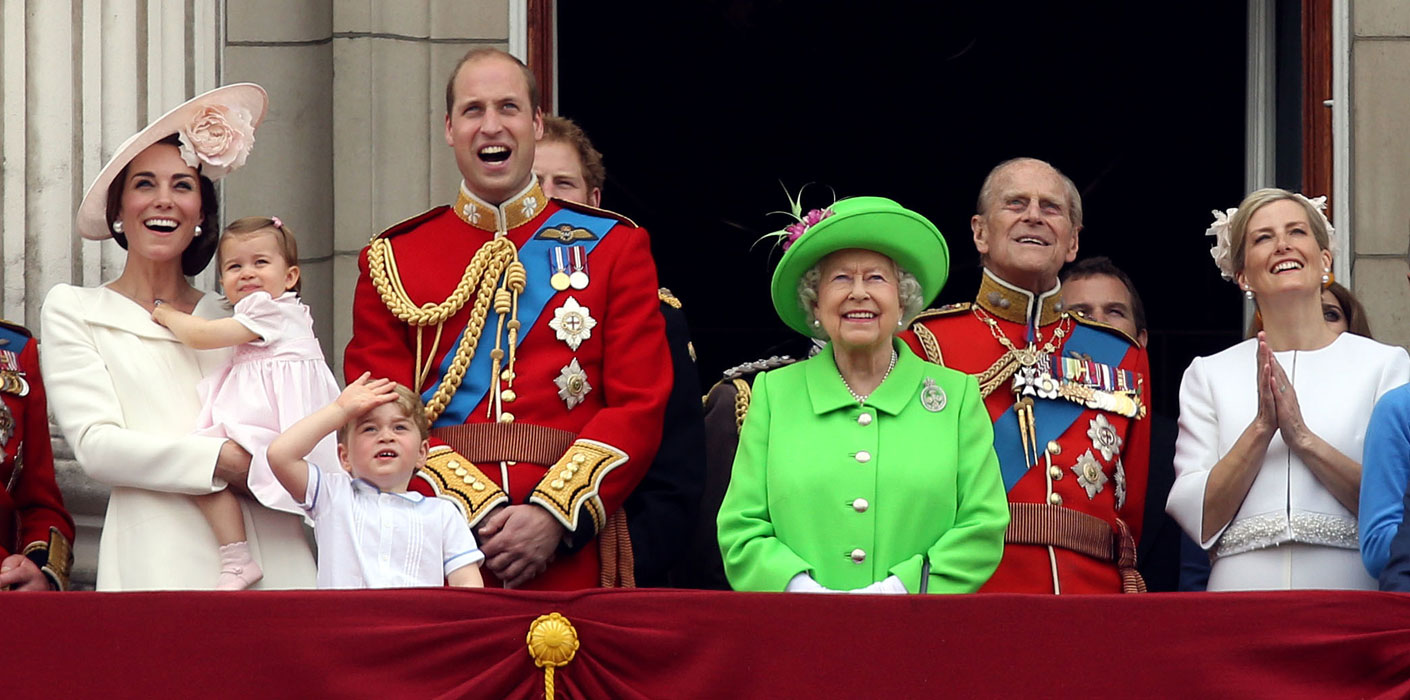
Official celebrations to mark Sovereigns' birthday have often been held on a day other than the actual birthday, particularly when the actual birthday has not been in the summer. King Edward VII, for example, was born on 9 November, but his official birthday was marked throughout his reign in May or June when there was a greater likelihood of good weather for the Birthday Parade, also known as Trooping the Colour.
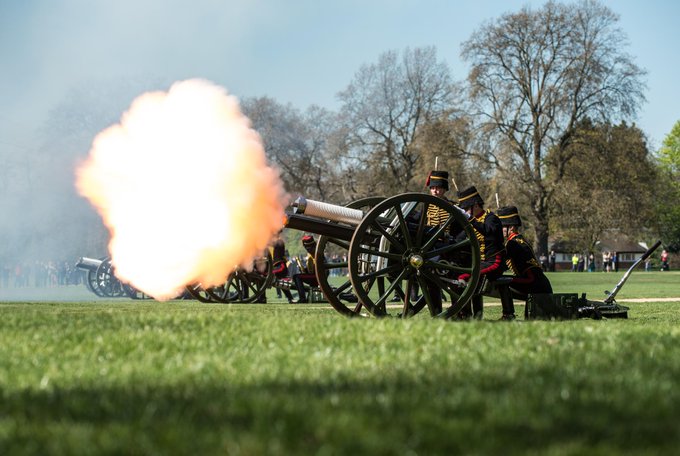
The Queen usually spends her actual birthday privately, but the occasion is marked publicly by gun salutes in central London at midday: a 41 gun salute in Hyde Park, a 21 gun salute in Windsor Great Park and a 62 gun salute at the Tower of London. In 2006, Her Majesty celebrated her 80th Birthday in 2006 with a walkabout in the streets outside of Windsor Castle to meet well-wishers.
Gun salute marks the Queen's birthday
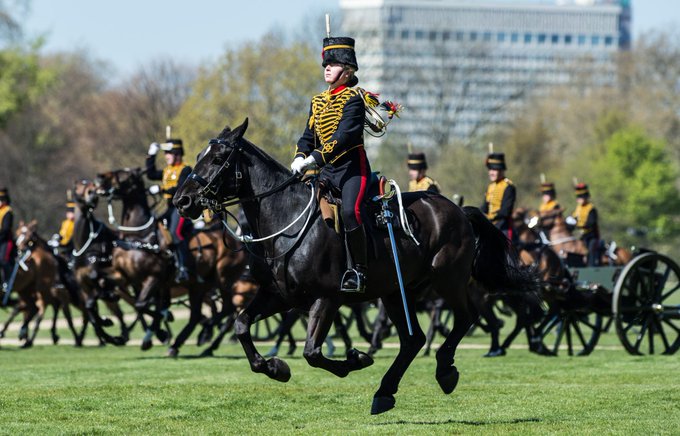
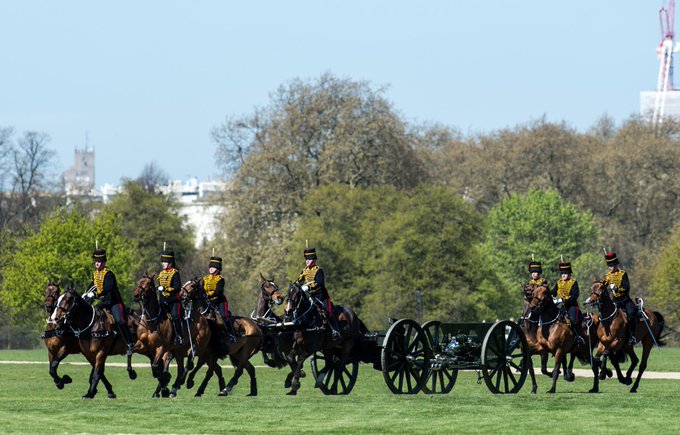

On her official birthday, Her Majesty is joined by other members of the Royal Family at the spectacular Trooping the Colour parade which moves between Buckingham Palace, The Mall and Horseguards’ Parade as well as a public appearance on the balcony of Buckingham Palace.
Official celebrations to mark Sovereigns' birthday have often been held on a day other than the actual birthday, particularly when the actual birthday has not been in the summer. King Edward VII, for example, was born on 9 November, but his official birthday was marked throughout his reign in May or June when there was a greater likelihood of good weather for the Birthday Parade, also known as Trooping the Colour.
The Queen usually spends her actual birthday privately, but the occasion is marked publicly by gun salutes in central London at midday: a 41 gun salute in Hyde Park, a 21 gun salute in Windsor Great Park and a 62 gun salute at the Tower of London. In 2006, Her Majesty celebrated her 80th Birthday in 2006 with a walkabout in the streets outside of Windsor Castle to meet well-wishers.
Gun salute marks the Queen's birthday
On her official birthday, Her Majesty is joined by other members of the Royal Family at the spectacular Trooping the Colour parade which moves between Buckingham Palace, The Mall and Horseguards’ Parade as well as a public appearance on the balcony of Buckingham Palace.
Spring Bank Holiday in the United Kingdom
The spring bank holiday, also known as the late May bank holiday, is a time for people in the United Kingdom to have a day off work or school. It falls on the last Monday of May but it used to be on the Monday after Pentecost.


In Endon in Staffordshire, the villagers dress their well, hold a fayre (village celebration) and crown a girl as the Well Dressing Queen. Local men hold a competition, known as 'Tossing the Sheaf', in which they compete to see who can toss a bale of straw the highest. In other places, boats are blessed, Morris dancers put on displays and local festivals are held.

Public Life
The last Monday in May is a bank holiday. Many organizations, businesses and schools are closed. Stores may be open or closed, according to local custom. Public transport systems often run to a holiday timetable.
Background
The spring bank holiday started as the Monday after Pentecost. This is known as Whitsun or Whit Monday in the United Kingdom. The Banking and Financial Dealings Act 1971, moved this bank holiday to the last Monday in May, following a trial period of this arrangement from 1965 to 1970.
In 2002 this bank holiday was moved to June 4 to follow an extra bank holiday on June 3. This gave people a four-day weekend to celebrate the Golden Jubilee of Queen Elizabeth II. This marked the 50th year of her accession to the throne of the United Kingdom. The spring bank holiday was also moved to June 4 in 2012, to form a long weekend along with the Queen’s Diamond Jubilee bank holiday.
Many people enjoy the Spring Bank Holiday with relaxing meals.
What Do People Do?
For many people the spring bank holiday is a pleasant day off work or school. Some people choose to take a short trip or vacation. Others use the time to walk in the country, catch up with family and friends, visit garden centers or do home maintenance. However, in some parts of the United Kingdom, there are some customs associated with this day.
On Cooper's Hill in Brockworth, Gloucestershire, people race down a steep hill following a large round cheese. The hill is concave and has an incline of 1:1 in some places. The first person to cross the finishing line wins a Double Gloucester cheese weighing about 8lbs (around 3.5kg). The custom may have been started by the Romans or ancient Britons and be an ancient fertility rite or a way of guaranteeing the rights of the villagers to graze their livestock on the surrounding land. In some years, there have been a lot of injuries, causing the event to be cancelled a couple of times in recent years. In these years, the cheese was rolled down the hill, but nobody was allowed to chase it.

In Endon in Staffordshire, the villagers dress their well, hold a fayre (village celebration) and crown a girl as the Well Dressing Queen. Local men hold a competition, known as 'Tossing the Sheaf', in which they compete to see who can toss a bale of straw the highest. In other places, boats are blessed, Morris dancers put on displays and local festivals are held.

Public Life
The last Monday in May is a bank holiday. Many organizations, businesses and schools are closed. Stores may be open or closed, according to local custom. Public transport systems often run to a holiday timetable.
Background
The spring bank holiday started as the Monday after Pentecost. This is known as Whitsun or Whit Monday in the United Kingdom. The Banking and Financial Dealings Act 1971, moved this bank holiday to the last Monday in May, following a trial period of this arrangement from 1965 to 1970.
In 2002 this bank holiday was moved to June 4 to follow an extra bank holiday on June 3. This gave people a four-day weekend to celebrate the Golden Jubilee of Queen Elizabeth II. This marked the 50th year of her accession to the throne of the United Kingdom. The spring bank holiday was also moved to June 4 in 2012, to form a long weekend along with the Queen’s Diamond Jubilee bank holiday.
понедельник, 27 марта 2017 г.
Mother's Day, a day to honour our mothers!
Mothering Sunday has been celebrated in the UK since the 16th century, but the date changes annually. In the UK, Mother’s Day 2017 is being celebrated on Sunday, March 26.
Mother's Day is a special day celebrated worldwide. Every year on the fourth Sunday in Lent, people show their appreciation to their mothers with gifts. This tradition has been going for about 400 years and is believed to have started in Britain when young people, who worked away from home, often working long hours, were given a day off by their employers, in order that they could return to their 'mother church' where they had been baptised, to spend time with their families. They would return home with small gifts such as flowers for the celebration.
Mother's Day is often confused with Mother's Day, which is held in the USA on the second Sunday of May. Although both celebrations are somewhat similar, their origins are different. In the USA, Mother's Day came about as a result of Anna Jarvis, who for many years, campaigned relentlessly for a national holiday in honour of mothers. She succeeded in 1909 and is now known as the founder of the Mother's Day holiday.

For most, Mother's Day and Mother's Day is a time for reflection, of thanking mothers today and in the past for all the good they have done and continue to do. The simnel cake, a rich fruit cake made with marzipan, is traditionally baked on Mother's Day. Originally young workers would take this home to their mothers. Over the years Mother's Day and Mother's Day has arguably become more commercialised, with shops taking over the many tasks that many of us used to do, such as hand made cards and presents. However as people still make a special effort to spend time with their mums on the day, Mother's Day and Mother's Day will continue to be a popular and much respected celebration of motherhood.

Подписаться на:
Сообщения (Atom)